
ELEMENTARY PROGRAM
(AGES 6 TO 12)
At Skyridge Montessori, the Elementary years (ages 6–12) offer an individually paced curriculum that challenges students academically while supporting their well-being and sense of self. Within a respectful and collaborative community, children learn to question, think critically, and take responsibility for their own learning—skills that will serve them throughout school and beyond.
Learning remains hands-on and movement-based, with cognitive, social, and emotional support. Students develop the ability to think abstractly, strengthen memory and creativity, grow in social awareness, and explore concepts of fairness, justice, and compassion.
Elementary Program Highlights
-
LEARNING ENVIRONMENT
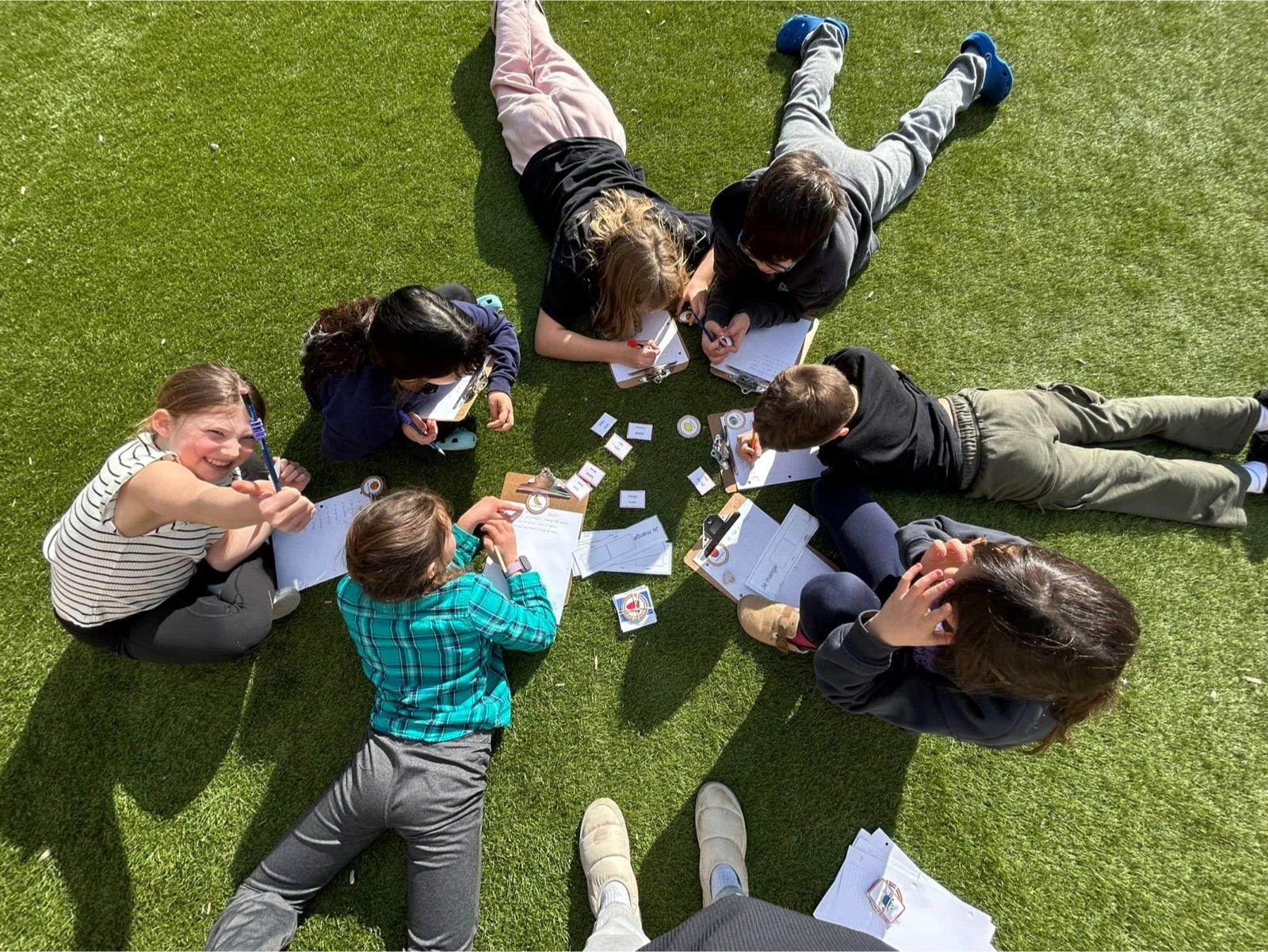
In a Skyridge Montessori elementary classroom, students work individually or in small groups in a calm, well-lit space. Materials are organized on accessible shelves, encouraging independence and exploration.
New students quickly feel at home with hands-on lessons, while returning students continue familiar routines with opportunities for deeper learning.
The classroom is a joyful community where students explore, create, collaborate, and reflect. Teachers guide, observe, and support each child as needed, fostering confidence, responsibility, and self-direction.
-
MULTI-AGE CLASSROOMS
At Skyridge Montessori, students are grouped in multi-age classes (6–9 and 9–12), creating a collaborative and supportive community. Older children serve as role models, guiding and sharing knowledge with younger peers, while younger students learn from their example.
This structure allows all children to lead, share, and grow at their own pace, fostering social skills, confidence, and an appreciation of differences.
-
PROGRAM SCHEDULE
Daily: 8:30 am – 3:30 pm
Weekly: Monday to Friday
Annual Schedule:
September to June (generally follows the public school calendar)
Curriculum
For returning Skyridge Montessori students, the Elementary program builds on the foundations established in Casa, while new students are guided to discover the joys of responsible participation in a supportive community.
Teachers lead each child through a rigorous, individualized curriculum tailored to their interests, needs, and abilities. Progress is monitored against clear benchmarks, supporting growth in academic skills, independence, confidence, intrinsic motivation, social responsibility, and global citizenship.
The Elementary curriculum includes the following areas of study:
-
In the Elementary program, Practical Life builds on the foundations of Early Childhood, shifting focus from self-care and fine motor skills to real-world skills that help children manage their time, pursue personal interests, and contribute to their community.
Lessons emphasize responsibility, organization, and independence, often supported by tools such as work plans and classroom reminders. Students learn to make thoughtful choices, prioritize tasks, and meet deadlines, fostering both autonomy and a sense of accountability.
-
In the Elementary program, children build on foundational number concepts, exploring place value, numerals, and quantities. Hands-on materials allow students to deepen their understanding of mathematical operations and patterns, gradually progressing to more complex functions while developing problem-solving and critical thinking skills.
-
Reading and writing are woven into all areas of learning, allowing children to explore their interests and curiosity. Students develop grammar, spelling, and mechanics while practicing clear expression through writing, reading, analysis, and critical thinking. These skills enable them to communicate ideas confidently in both formal and informal presentations.
-
Cultural Studies integrate subjects like zoology, botany, geography, history, civics, economics, the arts, and languages. Students explore the connections between living things and their communities, developing a broad understanding of the world and an appreciation for diversity, justice, and global citizenship.
-
Through interdisciplinary lessons built around the “Great Lessons,” students explore the origins of the universe, the development of our planet, and human civilization. They learn how the natural world is interconnected, and reflect on history, citizenship, and ways to contribute to a more peaceful and responsible society.

Ready to join our Skyridge community?
Take the next step forward to enrolling with us.